
Heat pressing machines are a staple in modern garment production and personalization, providing a high-quality, uniform, and efficient way of applying designs on a wide variety of material and fabrics. Heat pressing machines implement a combination of exact heat, pressure, and timing to ensure that graphics, vinyl, sublimation prints, and other embellishments adhere uniformly and colorfully to the substrate. Here, in this article, we will provide a detailed description of heat press machines, their technical principles, key features, selection criteria, usage best practices, and advantages that they provide to businesses of any size.
Understanding Heat Pressing Machine Technology
To effectively utilize a heat pressing machine, one should know the technology and the working mechanism. Thus, companies are in a position to get maximum efficiency, quality output, and the right machine for their precise production needs can be selected.
Function and Mechanism
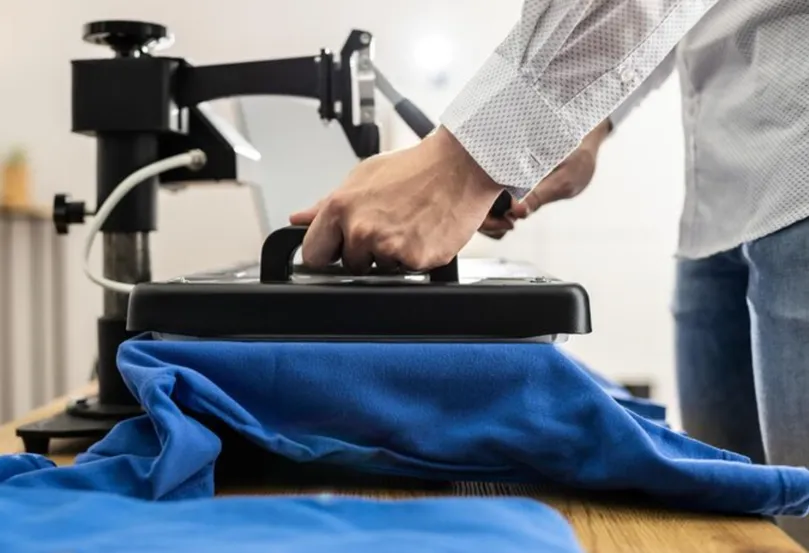
Heat pressing machine operates by closing a hot top platen over a substrate mounted on a lower platen with controls of temperature, pressure, and dwell time. It warms and presses the inks, adhesives, or vinyl substances onto the surface permanently. Heat and pressure are regulated for even adhesion and minimizing mistakes such as bubbling, ghosting, or color fading. It is an extremely replicable process and therefore appropriate for small bespoke orders and large volumes with professional and consistent results that modern consumer demands for quality.
Material Versatility
Modern heat press machines are used with a wide variety of substrates. From plain cotton t-shirts or polyester shirts, the machines are pressed onto hoodies, tote bags, leather goods, and specialty promotional products. The pressure and platen height control provide for safe processing of different thicknesses and textures. This makes companies capable of supporting mixed product lines, processing custom orders easily, and supporting more customers without needing multiple machines for multiple substrates.
Production Efficiency
Heat press machinery increases production efficiency significantly through machine design and workflow. Single-station equipment is best suited for low-volume operations, although dual-station and four-station carousel equipment offer simultaneous loading, pressing, and unloading. Overlap operation eliminates idling time and raises output, allowing for high-volume production without additional labor. Workflow integration efficiency offers the guarantee that each item is handled in the same way, reducing errors and maximizing overall productivity.
Key Features of Heat Pressing Machine
Choice of a heat press machine involves consideration of attributes that impact quality, productivity, and production durability. Familiarity with these major characteristics allows companies to make equipment selections that address current needs and long-term business objectives.
Platen Size and Configuration
The size of the heating platen determines the range of items that can be pressed and the flexibility of design placement. Machines with large platens, such as 16″× 20″, allow printing on larger garments or multiple designs at once. Multi-station designs, including two-station and four-station configurations, improve workflow efficiency by enabling operators to load and prepare one item while another is actively pressing. This simultaneous operation increases throughput, reduces idle time, and allows businesses to handle diverse product lines effectively.
Temperature and Pressure Control
It requires accurate temperature, pressure, and dwell time control to deliver repeatable transfer results. Digital controllers provide accurate settings depending on the kind of material and medium being transferred. Even heat distribution on heavy cast aluminum platens prevents any irregular adhesion or color deviation. Controllable conditions prevent waste, rich-detailed long-term designs, and professional-looking finish on each run, which is crucial in keeping customers satisfied.
Build Quality and Durability
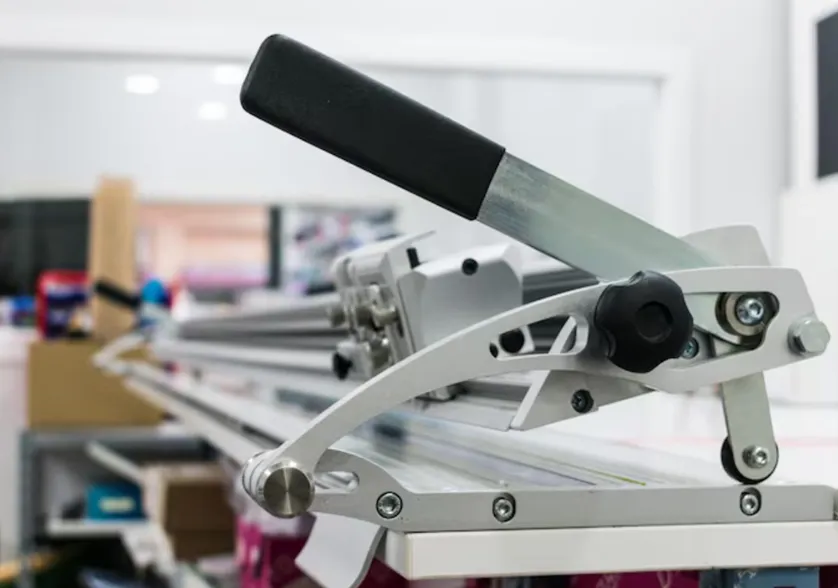
Robust construction guarantees long-term reliability. Steel frames of heavy-duty construction, Teflon-treated platens, and robust actuator mechanisms are standard on equipment of industrial grade. Pneumatic or automatic systems provide constant pressure per cycle, minimizing wear and providing consistent quality. Robust equipment can withstand cycle after cycle in high-volume operations, minimizing downtime and maintenance costs and maintaining a level of performance that does not deteriorate with time.
Choosing the Right Heat Pressing Machine for Your Workflow
Choosing the proper machine is a careful consideration of volume, material, and operation. Compatibility of machine capability and company requirement guarantees efficiency, quality, and expansion.
Single-Station Machines
Single-station machines are appropriate for startups, small businesses, or low-volume printing. They allow for direct observation of every print and are therefore ideal for personal or intricate prints. They save space and reduce the cost of initial investment as they take up little space. Single-station machines provide flexibility for various substrates while allowing operators to achieve high levels of quality for each piece.
Dual-Station Machines
Dual-station machines are applied for medium-volume production. They have one product ready while the other is in the process of being pressed, so downtime is significantly reduced. The setup accelerates throughput and efficiency without additional labor or floor space. Dual-station machines can fit various sizes and shapes of garments without any compromise on the quality, and they are a suitable choice for growing businesses which are keen to economically process more lots.
Multi-Station Carousel Machines
Four-station and higher carousel machines are best for high-volume production. The rotating systems allow simultaneous preparation, pressing, and unloading with peak efficiency and output. They are ideal for high-volume commercial production plants that produce a number of product lines or jumbo orders. Multi-station machines structure workflow, reduce operator fatigue, and provide consistent results, rendering them a sound investment in companies that require speed, quality, and quantity.
Operational Best Practices for Heat Pressing Machine
Operation and maintenance of heat pressing machines are crucial in ensuring consistent performance and consistent quality of output. Adoption of best practices reduces downtime, prevents equipment damage, and enhances overall production efficiency.
Pre-Operation Checks
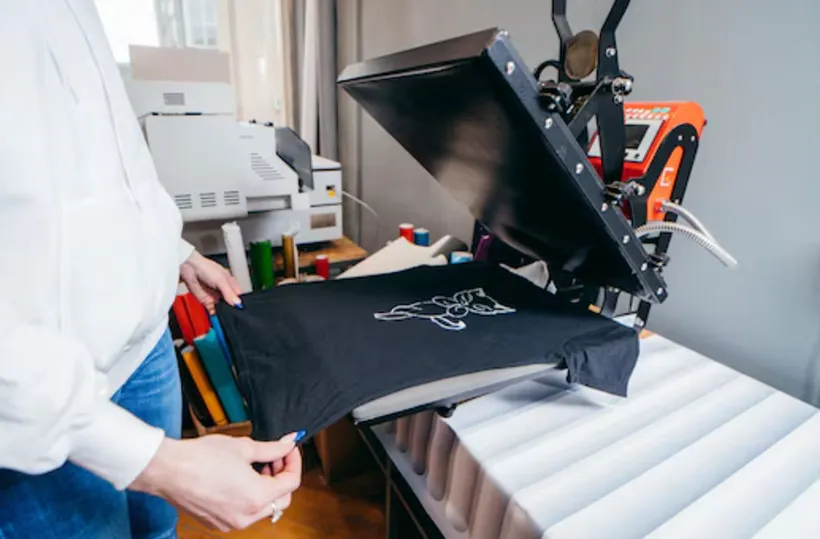
Operators need to inspect platen surface condition, Teflon coverage, temperature calibration, and correct functioning of pressure mechanism before producing. In the case of pneumatic systems, control of air supply and cleanliness are required. These checks prevent defects due to misregistered prints, adhesion failure, or substrate damage, in the process saving time and material.
Regular Cleaning and Maintenance
Platens need to be clean for uniform heat transfer. Scrape off residue with non-abrasive cloths or solvents compatible with Teflon coating without damaging the coating. Actuators, controllers, and moving parts need to be checked periodically for optimal performance. Greasing the actuator and replacement of consumable components at the right time optimize machine life, reduce maintenance cost, and provide uniform production quality.
Operator Training and Workflow Integration
Proper training acquaints the operators with setting pressures and temperatures, loading practices, and safety measures. Workflow integration is the process of incorporating the machine into the workflow to facilitate simultaneous loading, pressing, and unloading in multi-station configurations. Proper workflow integration eliminates idle time, maintains high-quality output, and allows enterprises to use their machine’s maximum capacity to achieve maximum productivity.
Advantages of Investing in a Quality Heat Pressing Machine
Investment in a good heat pressing machine has several payoffs, such as increased efficiency, quality consistency, and future scalability. All these make the machine a strategic investment for companies that want to scale up in competitive markets.
Enhanced Efficiency and Throughput
Multi-station presses have the ability to prepare and press simultaneously, reducing idle time and doubling production. Quick turnaround enables manufacturers to accomplish bulk orders in a short time and reduce labor cost per unit. High efficiency is greatly useful for companies that are required to increase production levels without necessarily reducing levels of quality.
Consistent Quality and Reduced Waste
Accurate temperature, pressure, and dwell time control guarantee reliable adhesion, rich colors, and durable prints. Defects and rejects are kept to a bare minimum by uniform heat distribution and pressure, reducing material waste and rework. Good quality output gives improved customer satisfaction and keeps the company’s reputation for reliability and professionalism intact.
Flexibility and Future Growth
Machines that can process different materials, different thicknesses of clothing, and big platens are what allow firms to be able to introduce new product lines and accept special orders. Flexibility allows for future growth without additional equipment expense. Buying a hardy, versatile machine ensures that the firm is set up to expand financially without lower productivity rates.
Conclusion
Heat pressing machines are a necessity in garment manufacturing these days and promise reliability, efficiency, and versatility. Understanding the technology, the choices, and ideal practices makes it possible for the companies to choose the right machine to meet their production requirements and adapt to future expansion. Proper maintenance, training personnel, and integrating the production process minimizes downtime and ensures maximum performance. A heat press that combines platen size, station layout, digital controls, and build quality optimizes manufacturing processes, improves throughput, and reduces waste. For business firms involved in customized apparel, promotional products, or mass garment manufacturing, a high-performance heat pressing machine is a strategic investment that optimizes efficiency, scalability, and product quality in the long run. You can visit our website KONIN – Professional DTF & UV DTF suppler. – KONIN to learn more details.